How I Stay Grounded and Strong with Yoga Meditation the TCM Way
I used to feel constantly drained, like my energy was leaking out for no reason. Then I discovered how yoga meditation, blended with Traditional Chinese Medicine (TCM) principles, could help maintain balance before problems arise. It’s not about curing illness—it’s about staying ahead of it. This is my real journey: simple practices, noticeable shifts, and a calmer, more resilient body. No magic, just consistency.
The Wake-Up Call: When Burnout Forced Me to Change
For years, I pushed through fatigue as if it were a normal part of being a working mother. Mornings began with coffee and a sense of dread. By mid-afternoon, my focus would fade, my throat would feel scratchy, and I’d reach for more caffeine just to stay upright. I visited doctors regularly, but blood tests showed nothing out of range. “You’re stressed,” they’d say, offering little else. I knew something deeper was off—my body was sending signals, but no one was interpreting them.
It wasn’t until a close friend mentioned she was seeing a practitioner of Traditional Chinese Medicine that I considered another path. She described feeling “lighter” and “more in tune” after just a few sessions. Curious, I scheduled a consultation. The practitioner didn’t run labs or scan organs. Instead, she asked about my sleep, digestion, emotions, and energy patterns throughout the day. She listened to my pulse in three positions on each wrist and examined my tongue. Then she said something that changed everything: “You’re not sick—but you’re not well, either. You’re in *wei bing*—the state before disease.”
This concept, central to TCM, refers to a subtle imbalance that hasn’t yet manifested as diagnosable illness but can lead there if unaddressed. It’s like a warning light on a car’s dashboard: the engine still runs, but something needs attention. That moment was my wake-up call. I realized I had been ignoring my body’s whispers, waiting for a scream. I decided to stop waiting. Instead of waiting for a crisis, I began exploring preventive practices—starting with yoga and meditation—not as occasional luxuries, but as daily acts of self-respect.
TCM Meets Mind-Body Practice: What Actually Happens?
At the heart of Traditional Chinese Medicine is the concept of Qi (pronounced “chee”), the vital energy that flows through the body along pathways called meridians. When Qi moves freely, we feel alert, calm, and strong. When it becomes blocked or depleted, we experience fatigue, irritability, poor digestion, or frequent colds. TCM doesn’t see these as isolated symptoms but as signs of deeper energetic imbalance. The goal isn’t to suppress symptoms but to restore flow.
Stress—especially chronic, low-grade stress—is one of the most common disruptors of Qi. In TCM, emotional strain directly impacts organ systems. For example, anger and frustration affect the liver, while worry and overthinking weaken the spleen. When Qi stagnates in these systems, it can lead to tension, digestive discomfort, or hormonal fluctuations. Over time, weakened Qi also compromises *Wei Qi*, the body’s defensive energy, which functions much like the immune system in Western medicine. When Wei Qi is strong, we resist infections easily. When it’s weak, we catch every bug that goes around.
Modern science offers a complementary view. Chronic stress activates the sympathetic nervous system—the “fight-or-flight” response—leading to elevated cortisol, increased inflammation, and suppressed immune function. This aligns closely with TCM’s understanding of Qi depletion. Yoga and meditation, when practiced consistently, help shift the body into the parasympathetic state—the “rest-and-digest” mode—where healing and regeneration occur. Through breath regulation, mindful movement, and stillness, these practices support both nervous system balance and energetic harmony.
Yoga postures, or asanas, are not just about flexibility. In the context of TCM, specific poses can stimulate meridians and organ systems. A forward bend, for instance, gently compresses the abdomen, supporting digestive organs linked to the spleen and stomach meridians. Twisting poses help release stagnation in the liver and gallbladder pathways. Even simple stretches, when done with awareness, become tools for energetic maintenance. Combined with meditation, which calms the mind and stabilizes Qi, yoga becomes a holistic practice for long-term resilience.
My Morning Routine: 20 Minutes That Set the Tone
I begin every day at 5:30 a.m., before the house stirs. The quiet allows me to connect with my body without distraction. My routine is simple: 20 minutes of gentle yoga followed by 10 minutes of seated breathwork. I don’t aim for intensity. Instead, I focus on consistency and presence. This small investment shapes the entire day.
The first part of my practice includes a slow flow of movements designed to awaken the body’s energy. I start with Cat-Cow poses to mobilize the spine and encourage Qi flow along the governing and conception vessels—central channels in TCM. Then I move into gentle lunges to open the hip flexors, which are connected to the liver meridian. According to TCM, the liver stores blood and ensures the smooth flow of Qi. When we sit for long hours, this energy can become stagnant, leading to irritability and fatigue. By stretching the hips and sides of the body, I release that tension early in the day.
I also include poses that support lung Qi, such as supported fish pose or gentle backbends. In TCM, the lungs govern the skin and immune defenses. The hours between 3 and 5 a.m. are when lung energy is most active, and by 5 to 7 a.m., it’s time to express that energy outward. Practicing during this window helps me feel more alert and protected. I’ve noticed that on days I skip this routine, I’m more prone to sneezing or feeling chilled—early signs that my defensive Qi is low.
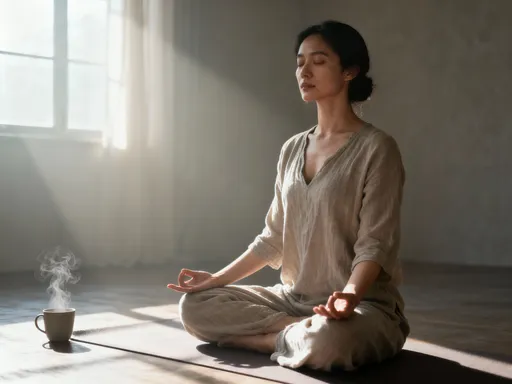
The final few minutes are spent in stillness. I sit cross-legged, hands resting on my knees, and set an intention for the day. It might be “patience,” “clarity,” or simply “presence.” This moment of quiet focus is not passive—it’s an active cultivation of mental and energetic stability. Over time, this ritual has become less of a practice and more of a promise to myself: I will not run on empty. I will honor my body’s need for balance before it asks for help.
Breath Like Medicine: The Forgotten Healing Tool
One of the most powerful tools I’ve learned is also the simplest: my breath. In TCM, proper breathing is essential for generating and circulating Qi. Shallow, chest-based breathing—common in modern life—leads to Qi deficiency, especially in the spleen and stomach, which are responsible for transforming food and air into usable energy. When these systems weaken, we feel sluggish, bloated, or mentally foggy.
To counter this, I practice abdominal breathing every morning and several times throughout the day. The technique is simple: inhale for four counts, allowing the belly to rise; exhale slowly for six counts, drawing the navel toward the spine. This 4-6 breathing pattern does more than calm the mind—it activates the vagus nerve, which signals the body to shift into rest-and-digest mode. This lowers heart rate, reduces cortisol, and supports immune function. From a TCM perspective, it strengthens Spleen Qi by improving the body’s ability to extract energy from food and air.
I’ve found that practicing this breath for just five minutes can change my entire state. If I feel overwhelmed at work, I step into a quiet space and do three rounds. If I wake up anxious, I lie in bed and breathe deeply before rising. Over time, this practice has had measurable effects: I get fewer colds, my digestion has improved, and I fall asleep more easily. My husband has even commented that I seem “less reactive”—a sign that my internal environment is more stable.
The beauty of breathwork is that it’s always available. It doesn’t require a mat, a studio, or special equipment. It’s a private act of care that can be woven into any moment. By treating breath as medicine, I’ve reclaimed a sense of agency over my health. I’m not waiting for a doctor to fix me. I’m using my own body’s intelligence to maintain balance every day.
Meditation Beyond Relaxation: Training Your Body’s Defense System
For years, I thought meditation was about escaping stress. I imagined sitting perfectly still, emptying my mind, and achieving peace. When I couldn’t do that, I assumed I was failing. It wasn’t until I reframed meditation as training—for both mind and body—that it became sustainable. Now, I see it as a way to strengthen my internal defenses, much like exercise strengthens muscles.
Mindfulness meditation, in particular, has been shown to reduce inflammation, lower blood pressure, and improve immune response. These benefits are not just physical—they’re deeply connected to emotional regulation. When we observe our thoughts without reacting, we reduce the chronic stress that depletes Qi. In TCM, the heart houses the mind (*Shen*), and when the Shen is disturbed by anxiety or overstimulation, it affects sleep, focus, and emotional stability. A calm Shen supports a strong immune system, because the body isn’t constantly in survival mode.
My practice begins with a body scan. I sit quietly and move my attention slowly from the toes to the crown of the head, noticing areas of tension, warmth, or numbness. These sensations are early warning signs of Qi stagnation or deficiency. For example, tight shoulders may indicate liver Qi blockage, while a heavy head could signal phlegm-dampness from weak spleen function. By catching these signals early, I can adjust—through stretching, breathwork, or rest—before symptoms worsen.
This practice has also deepened my understanding of the mind-body connection. When I feel mentally scattered, I notice physical fatigue. When I’m emotionally resilient, my body feels lighter. TCM teaches that mental clarity and physical vitality are not separate—they arise from the same source: balanced Qi. Meditation isn’t about perfection. It’s about showing up, listening, and responding with care. Over time, this has transformed my relationship with myself. I’m less reactive, more patient, and more in tune with my needs.
Lifestyle Sync: Aligning Habits with Nature’s Rhythm
One of the most profound lessons from TCM is that health isn’t just about what we do—it’s about when we do it. The body follows natural rhythms, and aligning our habits with these cycles enhances our resilience. This concept, known as “living in harmony with nature,” has become a cornerstone of my daily life.
For example, I now treat breakfast as the most important meal of the day—not because of Western nutrition trends, but because TCM teaches that spleen and stomach Qi are strongest in the morning. This is the time when the body is best equipped to transform food into energy. I eat warm, cooked foods like oatmeal, congee, or scrambled eggs with vegetables. These are easier to digest and support Spleen Qi, unlike cold cereals or smoothies, which can create dampness and sluggishness over time.
In the evening, I reduce screen time after 9 p.m. According to TCM, the hours between 9 and 11 p.m. are when the triple burner system regulates fluid balance and prepares the body for rest. Excessive stimulation during this time disrupts Yin energy—the cooling, nourishing aspect of the body—making it harder to fall asleep and recover overnight. Instead of scrolling, I read, journal, or practice gentle stretching. This simple shift has improved my sleep quality significantly.
I also adjust my yoga practice with the seasons. In winter, I focus on grounding poses like Child’s Pose and seated forward folds, which conserve energy and support kidney Qi—the body’s foundational energy reserve. In spring, I incorporate more twisting and side-body stretches to support liver detoxification and the free flow of Qi after winter stagnation. These seasonal rhythms aren’t rigid rules—they’re gentle guides that help me stay in tune with my body’s needs. The key isn’t intensity, but consistency. Small, regular practices compound over time, creating lasting balance.
When to Seek Help: Honoring the Limits of Practice
While my daily yoga and meditation routine has transformed my well-being, I’ve learned that self-care is not a substitute for professional medical care. There have been moments—like persistent fatigue or digestive changes—when I knew I needed more than breathwork. In those times, I’ve sought guidance from licensed TCM practitioners and Western doctors alike.
Consulting a TCM practitioner has been invaluable. They’ve provided personalized advice, such as herbal formulas to support spleen function or acupuncture to unblock stagnant liver Qi. These treatments work synergistically with my daily practices, offering deeper correction when needed. I now see my role as the steward of my health, while professionals provide expert navigation when the path gets unclear.
It’s also important to recognize red flags. Unexplained weight loss, chronic pain, or sudden changes in energy or mood are not just signs of Qi imbalance—they may indicate underlying conditions that require medical evaluation. Meditation and yoga can support recovery, but they are not cures for serious illness. I’ve learned to listen with discernment: some days, what I need is a quiet breath. Other days, what I need is a doctor’s appointment.
True health lies in the balance between self-awareness and professional care. By combining preventive practices with regular check-ups, I’ve created a safety net for my well-being. I no longer wait for a crisis to act. I monitor, adjust, and seek help when necessary. This integrated approach has given me a deeper sense of control and peace.
This journey hasn’t been about achieving perfection—it’s about listening, adjusting, and showing up for myself daily. Blending yoga meditation with TCM wisdom has transformed how I view health: not as the absence of disease, but as a living, breathing balance I help shape every day. It’s simple, sustainable, and deeply empowering. And honestly? I wish I’d started years ago.