How Meditation Rewired My Brain Without Changing My Life
You don’t need to sit for hours or live on a mountain to feel the shift—just a few mindful minutes a day can quietly transform how you handle stress, focus, and emotions. I didn’t believe it either, until I tested it myself during a rough patch. No magic, no hype—just real changes in how my mind reacted to daily chaos. This is about how simple meditation practices helped me regain balance, one breath at a time, without overhauling my routine. It wasn’t about becoming a different person. It was about learning to be present with the one I already was.
The Breaking Point That Made Me Try Meditation
It wasn’t a single event that pushed me toward meditation, but a slow buildup of emotional fatigue. For months, I felt like I was running on a treadmill set just slightly too fast—always moving, never arriving. My thoughts raced from one responsibility to the next: work deadlines, family schedules, grocery lists, unanswered emails. Even in quiet moments, my mind wouldn’t rest. I’d lie in bed at night, replaying conversations or worrying about things that hadn’t happened yet. Sleep became fragile. I’d wake up feeling tired, even after eight hours. My patience wore thin. A delayed train, a spilled coffee, a child’s tantrum—small things that used to roll off my back now felt like personal attacks.
I tried everything I thought would help. I stayed busy, believing that distraction was the same as relief. I poured extra energy into productivity, thinking if I just got ahead, I’d finally feel calm. I exercised more, drank less caffeine, cut back on screen time. Some of it helped, but only temporarily. The underlying tension remained, like a low hum beneath the surface of my days. I wasn’t depressed, but I wasn’t truly present either. I was surviving, not living. That’s when a friend gently suggested meditation—not as a cure, but as a tool. I almost laughed. The idea of sitting still with my thoughts sounded like punishment, not peace. But I was out of options. So I gave it a try, not because I believed it would work, but because I had nothing to lose.
What Meditation Actually Is (And What It’s Not)
Before I began, I had a lot of misconceptions about meditation. I thought it was about emptying the mind completely—achieving a state of perfect silence and serenity. I imagined monks on mountaintops, untouched by emotion or thought. I assumed it required special knowledge, a spiritual belief system, or at least a yoga mat and a quiet room. I also worried I’d be bad at it, that my busy mind would disqualify me from ever benefiting. None of that turned out to be true. Meditation, as I’ve come to understand it, isn’t about stopping thoughts. It’s about changing your relationship to them.
At its core, meditation is mental training. Just as lifting weights strengthens muscles, meditation strengthens attention and emotional regulation. It’s the practice of noticing what’s happening in your mind and body without immediately reacting to it. When a thought arises—“I’m late,” “This isn’t fair,” “What if something goes wrong?”—you learn to observe it like a cloud passing through the sky, rather than chasing it or fighting it. This simple act of awareness builds over time. And the best part? It requires no special equipment, no belief system, and no lifestyle overhaul. You don’t have to chant, burn incense, or renounce anything. You just need a few minutes and the willingness to pay attention.
One of the most freeing realizations was that getting distracted isn’t failure—it’s the practice. Every time your mind wanders and you gently bring it back to your breath or your body, you’re doing the work. It’s like doing a rep at the gym. The moment of redirection is where the growth happens. Once I stopped judging myself for having thoughts, meditation became less intimidating and more accessible. It wasn’t about achieving perfection. It was about showing up, again and again, with kindness toward myself.
The Science Behind the Shift: How Meditation Changes the Brain
What surprised me most was learning that meditation isn’t just a feel-good practice—it has measurable effects on the brain. Neuroscientific research over the past two decades has shown that regular meditation can physically alter brain structure and function. One of the most well-documented findings comes from studies using MRI scans, which reveal increased gray matter density in regions associated with self-awareness, compassion, and emotional regulation. The prefrontal cortex, responsible for decision-making and focus, becomes thicker with consistent practice. This means the brain literally strengthens its ability to manage stress and stay present.
Equally important is what happens in the amygdala, the brain’s alarm center. This small, almond-shaped region is responsible for triggering the fight-or-flight response. When we’re under chronic stress, the amygdala becomes hyperactive, making us more reactive to everyday challenges. Studies show that people who meditate regularly experience reduced activity in the amygdala. In one Harvard study, participants who practiced mindfulness meditation for just eight weeks showed a measurable decrease in amygdala volume, along with self-reported reductions in anxiety and stress. This doesn’t mean emotions disappear—it means the brain becomes less quick to panic, giving you more space between stimulus and response.
Another key change occurs in the default mode network (DMN), the brain system active when we’re not focused on a task—when we’re daydreaming, ruminating, or thinking about the past or future. An overactive DMN is linked to mind-wandering and unhappiness. Meditation has been shown to quiet this network, reducing mental chatter and the tendency to get lost in negative thought loops. The result? A calmer, more focused mind that’s less likely to spiral into worry. These aren’t abstract concepts—they translate into real-life benefits: better sleep, improved concentration, and greater emotional stability.
My First Real Win: Noticing the Small Shifts
The changes didn’t happen overnight. There was no dramatic epiphany or sudden sense of enlightenment. Instead, the benefits came in small, almost imperceptible shifts—like noticing the light change in the late afternoon. My first real win wasn’t a grand transformation but a tiny moment of awareness: I was stuck in traffic, something that used to trigger instant frustration. But this time, instead of gripping the steering wheel and cursing under my breath, I noticed my shoulders were tense. I took one slow breath. Then another. I didn’t fix the traffic, but I changed my reaction to it. That small pause felt like a victory.
Another shift showed up in conversations. I began to catch myself when my mind started planning what I would say next instead of truly listening. I’d notice the impulse to interrupt and pause instead. People started commenting that I seemed more present, more patient. At first, I didn’t believe them—until I realized I was hearing more of what they were actually saying, not just waiting for my turn to speak. I also started noticing negative thought patterns earlier. When the voice in my head said, “You’re not doing enough,” I could recognize it as a familiar habit, not an absolute truth. That distance—between me and my thoughts—was new. It didn’t silence the voice, but it weakened its power.
These early wins weren’t dramatic, but they were consistent. I wasn’t suddenly stress-free, but I was less reactive. I wasn’t perfectly focused, but I could return to the present more easily. Most importantly, I began to trust the process. I didn’t need to feel transformed to know something was shifting. The evidence was in the moments of clarity, the breaths I remembered to take, the times I chose response over reaction. Progress wasn’t measured in hours of meditation but in the quality of my daily experience.
Simple Methods That Actually Worked for Me
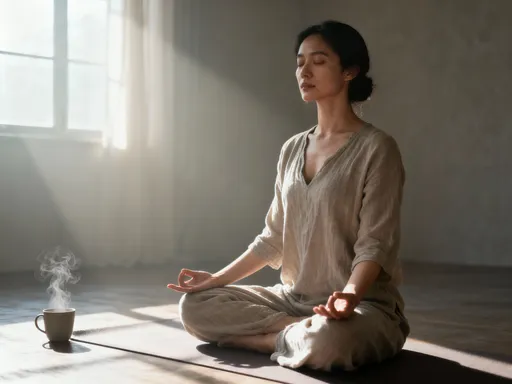
I didn’t start with complex techniques or long sessions. I focused on three simple, accessible practices that fit into my life without adding pressure. The first was focused breathing—just five to seven minutes a day, sitting upright in a chair, eyes closed or softly focused. I’d bring my attention to the sensation of my breath: the rise and fall of my chest, the air moving through my nostrils. When my mind wandered—and it always did—I’d gently return to the breath. No judgment, no frustration. This wasn’t about achieving stillness but about training attention. Over time, this short practice became a mental anchor, a way to reset during a busy day.
The second technique was the body scan, which I did most nights before bed. Lying down, I’d slowly move my awareness from my toes to the top of my head, noticing any areas of tension without trying to change them. If my shoulders felt tight, I’d acknowledge it. If my jaw was clenched, I’d observe it. The goal wasn’t relaxation but awareness. Surprisingly, this often led to relaxation anyway. My body, so used to holding stress without me noticing, began to let go. I fell asleep faster and woke up feeling more rested. The body scan taught me that the mind and body are deeply connected—when I paid attention to one, the other responded.
The third practice was mindful walking, which turned short, everyday moments into opportunities for presence. Whether I was walking from the car to the office, pacing while waiting for the kettle to boil, or taking a quick break around the block, I’d focus on the physical sensations of movement: the pressure of my feet on the ground, the swing of my arms, the rhythm of my steps. I wasn’t trying to get anywhere fast—I was just walking, with full attention. This practice helped me integrate mindfulness into motion, proving that meditation didn’t have to happen on a cushion. It could happen anywhere, anytime. What mattered most wasn’t the length of the practice but the consistency. Two to five minutes a day, done regularly, had a bigger impact than an occasional 30-minute session.
How to Fit It Into a Crazy Schedule (Without Adding Pressure)
One of my biggest fears was that meditation would become another item on my to-do list—another source of guilt when I “failed” to do it. So I made a rule: no pressure, no perfection. I stopped aiming for ideal conditions—quiet room, perfect posture, uninterrupted time. Instead, I looked for small, natural openings in my day. I started by meditating right after brushing my teeth in the morning. It wasn’t glamorous, but it worked. The habit of brushing served as a cue, making it easier to transition into a few minutes of breathing. On busy mornings, I’d do it while waiting for the coffee to brew, standing in the kitchen, eyes closed, hands wrapped around a warm mug.
Another trick was habit-stacking—attaching meditation to something I already did consistently. For example, I began taking three mindful breaths before starting the car. It took less than a minute, but it created a mental buffer between the rush of getting ready and the stress of driving. I also used red lights as mini-meditation opportunities. Instead of reaching for my phone, I’d check in with my breath and body. These micro-moments added up. I learned that meditation doesn’t have to be a separate event. It can be woven into the fabric of daily life.
I also gave myself permission to miss days. Life happens—sick kids, work emergencies, travel disruptions. I used to think skipping a day would ruin my progress. Now I see it differently. Self-compassion is part of the practice. Coming back, even after a long break, is always possible. The goal isn’t perfection but continuity. Over time, meditation became less of a task and more of a refuge—a few minutes I looked forward to, not because I had to do it, but because it helped me feel more like myself.
Beyond Calm: Unexpected Psychological Benefits I Didn’t Expect
I started meditation to reduce stress, but the benefits went far beyond feeling calmer. One of the most unexpected changes was in my focus at work. I noticed I could stay on task longer, resist the urge to check my phone constantly, and return to my work more quickly after interruptions. It wasn’t that I had more time—it was that I used my attention more effectively. I also became more aware of my emotional boundaries. I started recognizing when I was taking on other people’s stress or saying yes out of guilt. I learned to pause before responding, which gave me space to choose kindness without sacrificing my own well-being.
Another surprising benefit was increased patience—with my family, my coworkers, even myself. I didn’t become a saint, but I noticed I could sit with discomfort without needing to fix it immediately. When my child spilled juice for the third time in a week, I didn’t snap. I took a breath. I cleaned it up. I moved on. These moments of patience weren’t about suppressing emotion—they were about having more room inside myself to respond thoughtfully. I also found that small mental resets throughout the day improved my decision-making. After a brief meditation, I could approach a difficult conversation with more clarity and less reactivity. The ripple effects were real: better communication, fewer regrets, more intentionality.
Perhaps the most profound shift was in my relationship with myself. I became less harsh, less demanding. I started to see my thoughts and emotions not as commands to obey but as passing experiences to observe. This didn’t make life easier, but it made me more resilient. I could face challenges without falling apart. I could enjoy good moments without clinging to them. Meditation didn’t change my circumstances, but it changed how I moved through them. It gave me a quiet strength—a sense of inner stability that wasn’t dependent on external conditions.
Looking back, I realize meditation wasn’t about escaping life. It was about showing up for it more fully. It didn’t require grand changes or dramatic sacrifices. It asked only for a few minutes of my attention, a willingness to be present, and the courage to start small. If you’re skeptical, that’s okay. I was too. But I encourage you to try it for just one week—not to transform your life, but to see what happens when you pause, breathe, and pay attention. You might not notice fireworks. But you might notice a little more space, a little more clarity, a little more peace. And sometimes, that’s enough.