Tired of dry air messing with your focus at work? This smart humidifier fixed it for good
How many times have you rubbed your eyes, sipped water, and still felt drained by midday? Dry office air sneaks up on you—sapping energy, dulling focus, and leaving you counting down the hours. I used to think it was just fatigue—until I tried a smart humidification system that adjusted quietly in the background. No more constant throat clearing, no more itchy skin. Just clearer thinking and steady comfort, all workday long. It wasn’t magic—just tech that finally got real life.
The Unseen Workday Drain: How Dry Air Sabotages Your Productivity
You sit down at your desk, coffee in hand, ready to tackle the day. By 10:30 a.m., your eyes feel gritty. By noon, your throat is scratchy, and you’re reaching for water for the fifth time. You blame the late-night laundry folding, the kids’ early wake-up call, or maybe that extra hour of scrolling before bed. But what if the real issue isn’t your sleep—or your workload—but the air you’re breathing?
Dry indoor air is one of those silent productivity thieves we never see coming. Most offices, especially those with constant heating in winter or air conditioning in summer, strip moisture from the air without us even noticing. The result? A room that feels sterile and still—but also secretly draining. When humidity drops below 40%, your body starts sending subtle distress signals: dry nasal passages, tight skin, irritated eyes, and even headaches. These aren’t just annoyances—they’re distractions that pull your attention away from the task in front of you.
I remember one afternoon when I was finalizing a presentation for a big client. My mind kept wandering. I’d read the same sentence three times and still not absorb it. I blamed brain fog, stress, maybe too much sugar at lunch. Then I noticed my lips were chapped, my contact lenses felt like sandpaper, and I couldn’t stop swallowing. That’s when it hit me—my office wasn’t just quiet. It was a desert.
Science backs this up. Studies show that indoor humidity levels between 40% and 60% support better cognitive function, reduce fatigue, and even lower the risk of respiratory irritation. When the air is too dry, your body works harder just to stay comfortable, diverting energy that could be going toward focus and creativity. It’s like running a marathon in your mind while wearing heavy boots. You can do it—but it’s exhausting, and you won’t perform at your best.
For women in their 30s to 50s—juggling work, family, and personal goals—this kind of invisible drain matters even more. We don’t have the luxury of downtime. We need to be sharp, present, and emotionally balanced. And yet, so many of us are unknowingly fighting against an environment that’s working against us. The good news? The fix isn’t complicated. It starts with recognizing that comfort isn’t a luxury—it’s a foundation for performance.
From Gadget to Lifesaver: Discovering the Right Smart Humidifier
I won’t lie—my journey to better air started with frustration. My first humidifier was a basic cool-mist model I picked up at a big-box store. It promised relief, but what I got was a noisy machine that gurgled like a science experiment and left a wet ring on my desk. I had to refill it twice a day, clean it constantly to avoid mold, and still, the humidity never felt right. Some days the room was too damp; others, it was bone dry. I started to think maybe humidifiers just weren’t for real life.
Then I tried an ultrasonic model—quieter, sleeker, but just as high-maintenance. It looked great on my shelf, but I forgot to refill it, or worse, I didn’t realize the filter needed replacing until it started spewing white dust onto my keyboard. I felt like I was managing a pet, not using a tool to help me breathe easier. That’s when I started wondering—why isn’t there a humidifier that works with my life instead of against it?
The answer came in the form of a smart humidifier—one that didn’t just run on a timer or a manual dial, but actually responded to my environment. I first heard about it from a friend who works from home. She mentioned casually, “I barely think about my humidifier anymore. It just keeps the air perfect.” That sounded too good to be true. But when I saw how simple it was—small, quiet, connected to her phone—I decided to give it a try.
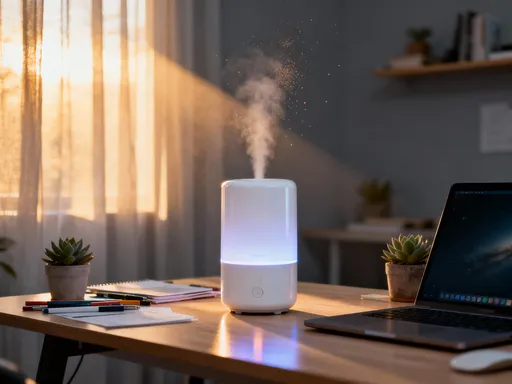
What changed everything was the shift from reactive to proactive. Instead of guessing when to turn it on or how long to run it, this device used built-in sensors to monitor the room’s humidity in real time. If the air got too dry, it ramped up. If it reached the ideal level, it slowed down or turned off automatically. No more over-humidifying. No more waking up to a too-stuffy room. Just consistent, balanced air—without me lifting a finger.
The emotional relief was real. For the first time, I didn’t feel like I was managing a gadget. I felt like I had a quiet partner in my workspace—one that cared about my comfort as much as I did. It wasn’t flashy or loud. It didn’t need constant attention. It just… worked. And in a world where so many things demand our energy, that kind of reliability felt like a gift.
How It Works Without You Lifting a Finger
You might be wondering—how can a machine just know what the air needs? It’s not magic, but it might as well feel like it. At the heart of most smart humidifiers is a humidity sensor—like a tiny weather station built into the device. It constantly checks the moisture level in the air, usually measured as relative humidity. When it drops below your preferred range—say, 45%—the humidifier kicks in. When it hits the target, it eases off or shuts down. This isn’t guesswork. It’s real-time adjustment, like cruise control for your indoor climate.
But the real game-changer is the app. Most smart humidifiers connect to your home Wi-Fi and come with a companion app for your phone. You can check the humidity in your office from the kitchen, adjust the settings from bed, or even set schedules based on your routine. I love starting my day by turning it on from my phone before I even get out of bed. By the time I sit down to work, the air feels fresh and balanced—like walking into a spa, but for your brain.
And because life gets busy, these devices come with thoughtful features that prevent hassle. Auto-shutoff means you never have to worry about running it dry. Filter replacement alerts pop up on your phone so you’re never caught off guard. Some models even have night mode—a dimmed display and whisper-quiet operation so it doesn’t disturb your focus or your family’s peace. It’s the kind of tech that doesn’t demand your attention. It just gives you comfort in return for almost no effort.
Think of it like this: your phone charges overnight without you thinking about it. Your coffee maker starts automatically. Why shouldn’t your air be just as effortless? This isn’t about having the fanciest gadget on the block. It’s about choosing tools that align with how you actually live—tools that support you quietly, consistently, and without drama.
The Ripple Effect on Focus, Mood, and Work Quality
Once the physical discomfort of dry air faded, I started noticing changes I didn’t expect. My focus improved—not in a dramatic, “I’ve been reborn” way, but in small, meaningful shifts. I could sit through a 90-minute meeting without feeling the urge to fidget or zone out. I finished reports faster because I wasn’t constantly distracted by a dry throat or itchy eyes. Even my creativity felt sharper. Ideas came more easily. Words flowed. It was like someone had quietly turned up the clarity in my mind.
And it wasn’t just about work. My mood felt more stable. I wasn’t as irritable when the kids asked for help with homework or when dinner plans fell apart. I realized how much low-grade physical discomfort had been amplifying my stress—like background noise I hadn’t even noticed until it was gone. With balanced humidity, my body wasn’t working overtime just to breathe. That small shift freed up mental and emotional space I didn’t know I was missing.
There’s also a nighttime benefit I didn’t anticipate. Breathing easier during the day meant I slept better at night. My nasal passages stayed clear, and I didn’t wake up with that dry, cotton-mouth feeling. Better sleep, of course, led to better days—creating a positive cycle. I wasn’t just surviving my to-do list. I was showing up with energy, patience, and presence.
For women managing households and careers, this kind of ripple effect matters. We’re not just looking for quick fixes. We want solutions that support our whole lives—our health, our relationships, our sense of control. And when something as simple as air quality can influence focus, mood, and rest, it becomes clear: the little things aren’t so little after all. They’re the foundation of how we show up in the world.
Transforming the Home Office Experience—For You and Your Family
If you work from home, your workspace isn’t just your own. It’s part of the family ecosystem. And when you make it more comfortable, everyone benefits. I noticed it first with my daughter. She has mild seasonal allergies, and during winter, her nose would get stuffy by midday. After I started using the smart humidifier, she commented, “Mom, your office feels easier to breathe in.” That small observation hit me—this wasn’t just about my productivity. It was about creating a healthier space for everyone who walked through the door.
My partner noticed, too. He’d pass by and say, “It’s so quiet in there. And the air feels nice.” No more humming, no more wet trays, no more “Did you forget to clean that thing again?” It became a space he’d actually want to step into—not just tolerate. And because the device is so low-maintenance, I didn’t have to nag myself to keep it running. It just stayed consistent, like a quiet act of care I was giving not just to myself, but to my home.
During colder months, when indoor air tends to be driest, the impact is even greater. Heaters pull moisture from the air, which can make everyone feel more tired, more congested, more on edge. A smart humidifier helps balance that—keeping the environment comfortable without overdoing it. It’s not about luxury. It’s about well-being. And when your home supports your health, it becomes a true sanctuary—not just a place you return to after a long day, but a space that helps you recharge and thrive.
Simple Steps to Make It Part of Your Daily Life
One of the biggest myths about smart home devices is that they’re complicated to use. I believed that, too—until I realized how simple this one was. Getting started took less than 15 minutes. I filled the tank with distilled water (which helps prevent mineral buildup), plugged it in, connected it to my Wi-Fi, and downloaded the app. That was it. No manuals, no frustration, no tech support calls.
Now, it’s part of my routine—so natural I barely think about it. Every morning, while I’m making coffee, I glance at the app to check the humidity. If it’s below 40%, I turn it on. Most of the time, it’s already running because it turned itself on overnight. When it’s time to refill, I do it during a bathroom break or while dinner’s in the oven. Cleaning takes about five minutes once a week—just a quick rinse and wipe. I’ve even set a monthly reminder on my phone for filter replacement, so I never forget.
Here’s my tip: treat your humidifier like you treat your phone. You charge it every night without thinking. You clean the screen when it gets smudged. You update the apps when prompted. Do the same for your humidifier. Refill it when low. Clean it regularly. Replace the filter on time. These tiny habits pay off in big ways—better air, better focus, better days.
And if you’re sharing the space with others, involve them. Let your partner know how it works. Teach your kids not to splash water into the tank. Make it a shared part of your home’s rhythm. That way, it’s not just your device—it’s part of your family’s well-being.
More Than Comfort—Why Small Tech Choices Shape a Better Life
This smart humidifier didn’t change my life in a single moment. It changed it in a thousand small ones. The moment I stopped reaching for water every 20 minutes. The morning I realized I hadn’t coughed once during a Zoom call. The evening I finished a project ahead of schedule because I stayed focused. These weren’t miracles. They were the quiet results of choosing a tool that supports me—body, mind, and spirit.
Technology doesn’t have to be flashy to be powerful. Sometimes, the most meaningful innovations are the ones that work silently in the background, removing friction instead of adding it. They don’t demand your attention. They give you back time, energy, and peace of mind. And for women who are already doing so much, that kind of support isn’t just helpful—it’s essential.
When we talk about self-care, we often think of bubble baths, journaling, or weekend getaways. But self-care also lives in the everyday choices we make—the tools we bring into our homes, the environments we create, the invisible systems that support our well-being. Choosing a smart humidifier wasn’t just about fixing dry air. It was about saying, “I deserve to feel good in my workspace. I deserve to breathe easily. I deserve to think clearly.”
And that mindset shift—that small act of prioritizing comfort and health—is what changes everything. Because when you feel better, you show up better. You lead with more patience. You create with more joy. You parent with more presence. You work with more confidence. And over time, those moments add up to a life that doesn’t just get by—but truly thrives.
So if you’ve been pushing through dry eyes, scratchy throats, and afternoon slumps, wondering why you can’t focus—take a moment to look at the air around you. It might be the one thing you haven’t considered. And the solution might be simpler than you think. Not every upgrade has to be huge to make a difference. Sometimes, all it takes is a little moisture, a little smart tech, and a lot of care for yourself. Because you’re worth breathing easy—and thinking clearly—every single day.