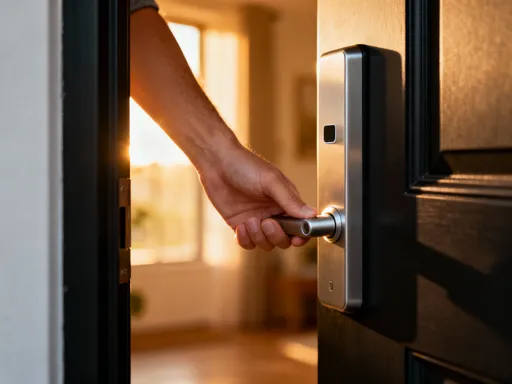
Worried about your home when no one’s there? This simple device gave me peace of mind
You know that uneasy feeling when you’re away from home—did you lock the door? Is the back window still open? I used to call neighbors to check on my house. Then I tried motion detection devices, and everything changed. It’s not about fancy tech; it’s about knowing your family and space are safe. Let me show you how one small gadget brought calm to my daily life—no expertise needed. That nagging voice in your head, the one that whispers, “Did I really turn off the stove?” or “What if someone walked in while we’re gone?”—it’s exhausting. I get it. And I didn’t want to live like that anymore. This isn’t a story about becoming a tech expert. It’s about finding a little more ease, a little more trust in the quiet moments when you’re not at home. And honestly, it started with just one small decision.
The Moment I Knew I Needed Something More
It was a rainy Tuesday afternoon. I had just returned from dropping my youngest off at soccer practice, groceries balanced in one arm, keys already in the door. As I stepped inside, I noticed it—the back door to the kitchen was slightly ajar. Not wide open, not broken, but definitely not how I left it. My heart dropped. I remember standing there, frozen, listening. No footsteps, no signs of disturbance, but the air felt different. Someone had been there, or something had happened when I wasn’t looking. I checked the yard, the garage, even under the porch. Nothing. No evidence of a break-in, no missing items. But that didn’t calm me. If anything, it made it worse. The uncertainty lingered for days. Was it the wind? Did I forget to latch it? Or did someone come in and leave without taking anything? That moment changed everything.
I realized I couldn’t keep living with that kind of doubt. I love my home. It’s where my kids do homework at the table, where we laugh over burnt pancakes on weekends, where I sip tea in silence before the house wakes up. It’s not just walls and floors—it’s safety, memory, comfort. And I didn’t want to feel afraid every time I walked out the door. I didn’t want to call my neighbor every time I went to the store. I didn’t want to lie awake on vacation wondering if everything was okay. I needed something simple, something reliable, something that could watch over the space I love when I couldn’t. That’s when I started looking into motion detection devices—not because I wanted to turn my house into a fortress, but because I wanted to breathe easier.
What Motion Detection Devices Actually Do (Without the Tech Jargon)
When I first started researching, I felt overwhelmed. Words like “passive infrared,” “dual-tech sensors,” and “luminance thresholds” made my eyes glaze over. I wasn’t trying to build a security lab—I just wanted to know if someone was in my house when they shouldn’t be. So I took a step back and asked myself: what do these things actually do in real life? And the answer is simpler than you think. Think of a motion detector as a quiet observer. It sits in the corner of a room, hallway, or entryway and watches for changes in movement. When something moves in its field of view—like a person walking by, a pet jumping on the couch, or even a large shadow shifting—it sends a signal. That’s it. No cameras, no recordings (unless you choose that), just a quiet alert that says, “Hey, something’s happening.”
Here’s how I like to explain it: imagine your cat. The second you open the fridge, even if you’re being quiet, your cat appears out of nowhere. How? It didn’t hear you—it sensed movement, temperature change, or routine. A motion detector works kind of like that. It notices when heat and motion cross its path. Most home devices use what’s called PIR—passive infrared—technology. That just means it detects body heat. So when a warm body moves in front of it, the device knows. It doesn’t care about sounds or light levels. It’s not looking for a burglar by name. It’s just saying, “Something warm just passed through here.” And then it does what you’ve told it to do—send a notification to your phone, turn on a light, or trigger an alarm.
The beauty is in how quietly it works. You don’t have to watch a screen or listen for sounds. You go about your day, and if something unusual happens, your phone gives a little buzz. It’s like having a friend quietly watching your back. And the best part? You don’t need to be a tech whiz to use it. Most of these devices are designed for people like us—busy, caring, not looking for complexity. They’re meant to blend into your life, not take over it.
Choosing the Right One for Your Home Life
Not all motion detectors are the same, and I learned that the hard way. My first one? I bought it online because it was cheap and had great reviews. But when I got it home, I realized it was meant for outdoor use—waterproof, built for porches and driveways. I needed something for inside, near the back door and the hallway upstairs. So I returned it and took a breath. This time, I asked myself a few simple questions: Where do I want to place it? What do I want it to do? And how easy should it be to set up and use?
For me, placement mattered most. I wanted to cover the main entry points—back door, front hallway, and the kitchen. I also wanted something that could connect to my phone, so I’d get alerts no matter where I was. Battery life was important too—I didn’t want to be changing batteries every few weeks. And I liked the idea of it working with my existing smart lights, so if motion was detected at night, a light could turn on automatically. That’s a big help when you’re coming in late or want to discourage unexpected visitors.
I ended up choosing a small, indoor model with a long battery life, Wi-Fi connectivity, and a simple app. It wasn’t the most expensive, but it had the features I actually needed. And here’s a tip: look for ones with adjustable sensitivity. Some devices go off every time a curtain moves or a heater kicks on. That gets annoying fast. A good one lets you fine-tune how much motion triggers an alert. I also made sure it didn’t require a hub—some systems need a separate base station, which adds cost and complexity. For a single device or two, a standalone model is perfect.
And don’t forget about your family’s routine. If you have kids coming home from school, you might want the device to ignore motion during certain hours. Or if you have pets, look for pet-immune models that won’t alert you every time your dog walks through the living room. Technology should fit your life, not force you to change how you live. That’s the whole point.
Setting It Up: A Step-by-Step Guide Anyone Can Follow
I’ll be honest—I was nervous the first time I set one up. I kept thinking, “What if I mess it up? What if it doesn’t connect? What if I accidentally set off an alarm in the middle of the night?” But here’s the truth: it was easier than setting up my coffee maker. Most devices come with clear instructions, and the apps walk you through every step. I’ll walk you through how I did it in my living room, so you can do it too—no stress, no confusion.
Step one: unbox and charge or insert batteries. Mine used two AA batteries, and it was ready to go in seconds. Step two: download the app. It was on both the Apple and Google stores, so I just searched the brand name and clicked install. Step three: open the app and create an account. It took less than a minute—just an email and password. Step four: follow the pairing instructions. The app told me to press a button on the device until a light blinked. Then it found the device on my Wi-Fi network. I entered my home Wi-Fi password, and within 30 seconds, it was connected.
Now came placement. I wanted it to cover the hallway leading to the back door, so I mounted it on the wall at about six feet high, facing the entrance. The app recommended avoiding direct sunlight, heat sources, and moving objects like fans or curtains. That makes sense—heat and movement can confuse the sensor. I tested it by walking through the hallway, and within seconds, my phone buzzed: “Motion detected.” I smiled. It worked. I did a few more tests—walking slowly, quickly, with my arms up—and each time, it caught me. Then I tested with my dog. She walked by, and nothing. Perfect. The pet immunity was doing its job.
The whole process took less than 20 minutes. No tools, no wires, no tech support calls. And the best part? I didn’t need to tell anyone I did it. It just started working. That quiet confidence—knowing it was there, watching—felt like a weight lifted.
How It Quietly Changed My Daily Routine
At first, I didn’t notice much. The device was there, I checked the app once in a while, but life went on. Then, slowly, things shifted. I stopped walking back to the car to check if I locked the door. I stopped calling my sister to ask if she could swing by and “just take a look.” I stopped lying in bed at night, mentally replaying my morning routine: Did I shut the garage? Did I arm the alarm? The constant mental checklist began to fade.
One afternoon, I got an alert at 3:17 PM. I was at my daughter’s school play, sitting in the front row, when my phone vibrated. “Motion detected in Kitchen.” My stomach dropped. The house should have been empty. I opened the app, saw the timestamp, and took a breath. I called my neighbor, who lived two doors down. “Could you peek in the back window? Just to check.” She did—and texted back: “Your dog is in the backyard, but the gate’s wide open.” Turns out, he’d pushed it open trying to chase a squirrel. I called my husband, we got someone to close the gate, and he was safe. But that alert? It saved us. Without it, we might not have known until hours later, if at all.
Since then, I’ve noticed other changes. I feel calmer on family trips. I don’t obsess over the house. I trust that if something happens, I’ll know. And even when it’s nothing—a delivery person dropping off a package, a cleaning service coming in—I appreciate the heads-up. It’s not about fear. It’s about awareness. It’s about being able to focus on the people and moments that matter, instead of worrying about what’s happening behind closed doors.
Making It Work for Your Family’s Unique Needs
Here’s what I love most: this little device isn’t one-size-fits-all. It adapts to your life. For my sister, who lives alone, it’s her nighttime safety net. She has one in her hallway that turns on a smart light if motion is detected after 10 PM. It’s not about catching intruders—it’s about making her feel less alone, less vulnerable in the dark.
For my friend Maria, who cares for her aging mother, it’s a way to check in without hovering. She placed a sensor near the kitchen and the bathroom. If her mom hasn’t moved by noon, she gets a gentle reminder to call. It’s not surveillance—it’s peace of mind. It lets her support her mom while still respecting her independence.
Another mom in my book club uses it to know when her teenager gets home from school. She doesn’t want to text every day and seem overbearing. But when the device alerts her that motion was detected at 3:45 PM, she knows her daughter is safe. It’s a quiet way to stay connected without constant checking.
And for those with home offices or valuables, it’s a simple layer of protection. One neighbor uses it to monitor her craft room, where she keeps expensive supplies. If someone enters when she’s not home, she knows immediately. It’s not about distrust—it’s about protecting what matters.
The key is to think about your own rhythm. Where do you feel uncertain? What moments would you love to know about? A motion detector isn’t just for security. It’s a tool for care, for connection, for confidence. You decide how to use it—and that power is in your hands.
Small Device, Big Peace of Mind
In the end, it’s not about living in fear. It’s about living with freedom. That little device on my wall doesn’t make me paranoid—it makes me calmer. It doesn’t make me check my phone more; it makes me put my phone down. Because I know. I know the house is quiet. I know no one’s walking through the kitchen at midnight. I know my dog isn’t stuck outside. And when something does happen, I’m not left guessing. I have information. I have choice. I have control.
It’s not perfect. Sometimes it alerts me to a shadow or a passing car’s headlights. But those moments are rare—and even then, I’d rather know and check than wonder in silence. It’s not a replacement for good locks, strong doors, or common sense. But it’s a quiet companion, a gentle guardian that works while I sleep, travel, or simply live my life.
If you’ve ever stood in a grocery store parking lot, wondering if you locked the door, I get it. If you’ve ever called a friend to check on the house, I’ve been there. And if you’ve ever wished for just one less thing to worry about, this might be it. You don’t need to become a tech expert. You don’t need a full security system. You just need one small step toward feeling safer, more connected, more at ease.
Take that step. Not because you’re afraid, but because you deserve peace. Because your home is worth protecting. And because sometimes, the smallest things bring the biggest relief. Let that quiet little device do its job—so you can do yours: living, loving, and breathing a little easier every day.