What If a Simple Note App Could Keep Your Aging Parents Closer—And Safer—Every Day?
We’ve all worried—your mom forgets her medication, your dad repeats the same story at dinner, and you’re miles away, feeling helpless. What if technology could quietly help? Not with complex gadgets, but something as simple as a shared note? It’s not about replacing calls or visits. It’s about adding a gentle layer of care, connection, and clarity—right in the flow of daily life. That small digital nudge can mean the difference between worry and peace, between isolation and belonging. And the best part? It doesn’t require a tech degree—just a heart that cares.
The Quiet Worry No One Talks About
Let’s be honest—there’s a low hum of anxiety many of us carry, one we don’t always talk about. You’re at work, in a meeting, or tucking your own kids into bed, and suddenly it hits: Did Mom take her blood pressure medicine today? Was it yesterday she said she felt dizzy? You call, but she answers with, “I’m fine, don’t worry,” even when you know something’s off. And if you live hours or states away, that distance feels heavier with every unanswered question.
I remember when my sister called me after visiting our dad. She found three empty yogurt cups in the trash—each labeled with the day of the week in shaky handwriting. He’d been trying to keep track of his meds, but the system failed. No alarm, no alert—just silence until someone showed up. That moment changed how we thought about care. It wasn’t about catching mistakes; it was about preventing them before they happened. And it wasn’t just about safety—it was about dignity. No parent wants to feel like a burden, and no child wants to feel like a detective.
These small gaps—missed pills, forgotten appointments, meals left uneaten—can snowball. They’re not emergencies, not at first. But over time, they chip away at confidence, both for the parent and the child. What if there was a way to stay gently involved—not hovering, not taking over, but just being present in a way that feels natural? Not through constant check-in calls that can feel like interrogations, but through something softer, simpler, and more sustainable?
Why Traditional Tools Fall Short
We’ve all tried the usual fixes. Sticky notes on the fridge: “Take pill at 10 AM.” But what happens when the note falls? Or gets covered by a grocery list? Paper calendars with big red X’s—until the next page is turned, and the habit fades. Text messages? They’re easy to miss, especially if your parent doesn’t check their phone often. And let’s be real—how many of us have sent a reminder, only to get a reply like, “I already did that!”—even when we know they didn’t?
Then there are the calls. You call every morning: “Did you eat breakfast? Did you take your meds?” At first, it’s sweet. But over time, it can start to feel like a checklist, not a conversation. Your parent might feel nagged. You might feel like you’re micromanaging from afar. And if they’re proud or private, they might just say “yes” to end the call, even if it’s not true. That gap between what we want to know and what we actually know is where worry lives.
And don’t get me started on the apps that look like they were made for astronauts. Logins, passwords, multiple screens, tiny buttons. I once tried to set up a medication tracker for my aunt, and by the third screen, she said, “This is why I don’t like technology.” She wasn’t resisting care—she was resisting confusion. The problem isn’t that these tools don’t exist. It’s that they don’t fit into real life. They ask older adults to adapt to technology, instead of adapting technology to them. And that’s where so many well-meaning efforts fall apart.
Meet the Unlikely Hero: The Family Note App
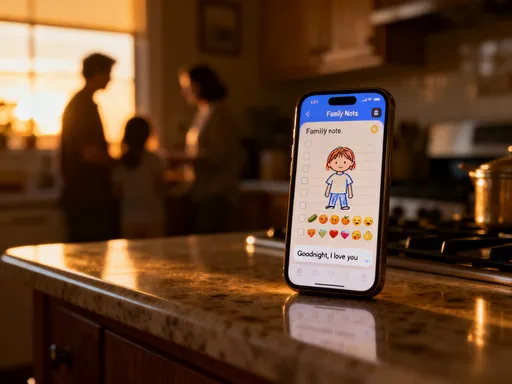
So what if the answer isn’t another complicated app or a high-tech monitoring system? What if it’s something as simple as a shared digital notebook—one that lives on a tablet or phone, but feels more like a kitchen counter memo than a piece of software?
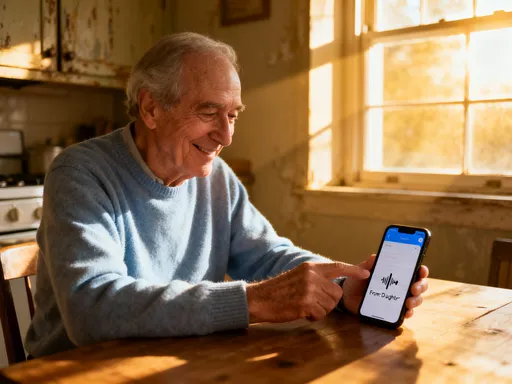
Imagine this: You open a family note app and see a photo your dad just sent—a slice of toast with peanut butter, captioned, “Breakfast!” No typing needed. He used voice input to say, “Feeling good today,” and it automatically turned into text. Meanwhile, your mom sees a gentle audio note from you: “Hey Mom, the blue pill is on the counter. Love you.” She taps once to play it—no reading, no typing, no stress. It’s not a medical alert. It’s a loving nudge, delivered in your voice.
These apps aren’t flashy. They don’t track heart rate or location. But they do something quietly powerful: they create a shared rhythm of care. Updates flow in both directions. You see that your dad walked the dog this morning because he posted a photo of the leash by the door. Your sister sends a voice note: “I called the doctor—your appointment is rescheduled for Thursday.” No more playing phone tag. No more guessing who knows what.
The magic is in the simplicity. No passwords. No confusing menus. Just one big button to record a voice note, another to snap a photo, and a timeline that shows everything in order. It’s not about data—it’s about presence. And because it’s private—just your family—there’s no fear of exposure or embarrassment. It’s like leaving a note on the fridge, but one that can talk back.
How It Builds Skills—For Everyone
Here’s something I didn’t expect: using this app didn’t just help my parents—it helped me. And not just with logistics. It changed how I communicate, how I listen, how I show up as a daughter.
At first, my dad was hesitant. “I don’t want to mess it up,” he said. So we started small. I showed him how to tap the microphone button and say, “I’m here.” He did it—once, twice. Then one day, he left me a note: “Your mom made lasagna. Saved you a piece.” My heart nearly burst. But beyond the sweetness, something deeper was happening. He was building confidence. Each time he used the app, he felt a little more capable, a little less dependent.
For older adults, routine is everything. And when technology fits into that routine—when it feels natural, not forced—it becomes a tool for independence, not a sign of decline. My mom started using voice notes to remind herself of grocery items. She’d say, “Need apples and oatmeal,” and the app would save it. Over time, she began to rely on it not because she was failing, but because it made life easier. That’s the difference between assistive tech and replacement tech. One supports. The other implies deficiency.
And for us, the adult children? We’re learning too. We’re learning patience—because tech adoption isn’t linear. We’re learning to celebrate small wins: “Dad sent his first photo!” We’re learning to listen differently, to read between the lines of a voice note that sounds a little slower or more tired than usual. These apps don’t just deliver information—they build emotional intelligence. They teach us to care in a way that respects boundaries, honors dignity, and fosters connection.
Designing for Dignity, Not Dependency
Let’s talk about design—because not all apps are created equal. The best ones don’t feel like apps at all. They feel like extensions of love. They use large, clear text. Simple icons—like a sun for morning, a moon for night. Voice-first input so fingers don’t have to tap tiny keys. And most importantly, they’re built for privacy. No data mining. No ads. Just a secure space for your family.
I’ll never forget when my aunt saw a notification from a different kind of app—an alert that said, “Your heart rate is elevated.” She panicked. Later, we found out it was just because she’d been gardening. But the damage was done. She felt watched. Monitored. Not cared for. That’s the danger of tools that prioritize data over humanity. They make people feel like problems to be solved, not people to be loved.
Contrast that with a simple note: “Left soup in the fridge. Heat for 3 minutes. ❤️” It’s not an alert. It’s a gesture. It’s warm. It’s personal. It’s the digital version of tucking a note into a lunchbox. And because it comes from someone who loves you, it lands differently. It doesn’t say, “You’re failing.” It says, “I’m here.”
These apps work because they’re not about control. They’re about collaboration. They don’t replace human connection—they enhance it. A voice note from your daughter saying, “I love you,” played at bedtime, isn’t just a message. It’s a ritual. It’s comfort. It’s a way of saying, “Even when I’m not there, I’m still part of your day.”
Making It Work in Real Life
Okay, so it sounds good—but how do you actually get started? Especially when your mom says, “I’m not tech-savvy,” or your dad grumbles, “I don’t need another gadget”?
The key is to make it feel natural, not like a chore. Start by introducing it during a visit. Sit together with the tablet. Show them one thing—just one. “See this button? If you tap it, you can say hello to me, and I’ll hear your voice.” Let them try it. Celebrate the attempt, not just the success. And if they forget? No pressure. Just gently remind them next time.
Use photos they recognize. Set their favorite family picture as the app icon—maybe a grandchild’s birthday or a vacation snapshot. That visual cue makes it feel familiar, not foreign. And consider timing. Instead of saying, “Use the app every day,” try, “Let’s leave each other a note when we have our morning coffee.” It becomes part of the rhythm, not an extra task.
Involve the whole family. When my nephew started sending voice notes to his grandma—“Nana, I drew a dinosaur!”—she lit up. It wasn’t just about reminders anymore. It was about joy. It was about being part of a story. And when multiple people contribute, no one feels like the sole caregiver. It becomes a shared responsibility, a shared love.
And if they resist? That’s okay. Start with you. Leave a note every day—just one. A photo of your coffee. A voice message: “Wishing I could have breakfast with you.” Over time, they’ll see it’s not a demand. It’s an invitation. And when they finally tap that microphone? It’ll be on their terms—not because they were pushed, but because they felt safe enough to try.
More Than Notes—Building a Lifeline of Love
Months into using the app, something shifted. It wasn’t just about pills or meals anymore. It became a living scrapbook of our family. My dad started sending photos of the birds at his feeder. My mom recorded a voice note singing an old song she used to hum while cooking. These weren’t updates—they were gifts. They weren’t about safety—they were about soul.
And then came the day I missed a call. My phone was dead. I got home to find a voice note from my dad: “Just wanted to say I love you. You’ve been busy. Don’t work too hard.” I cried. Not because I was worried. But because I felt seen. Held. Loved. In that moment, the app wasn’t technology. It was tenderness. It was the quiet echo of a lifetime of care, now flowing both ways.
That’s the truth no manual can capture: this isn’t about efficiency. It’s about intimacy. It’s about creating a space where love can be expressed in small, steady ways—where a reminder to take medicine can also carry a heartbeat, a memory, a smile. It’s about peace of mind, yes. But it’s also about presence. About knowing that even when life pulls you apart, you can still be part of each other’s days.
So if you’re carrying that quiet worry—if you’ve ever stared at your phone, wondering how your parent is really doing—know this: you don’t have to choose between distance and care. You don’t need a perfect solution. You just need a simple way to say, “I’m here.” And sometimes, that can fit in a single note.